
Editing and Software.
Showcasing Ellie’s journey through theatre and screen, blending acting, directing and editing with thoughtful creative exploration.
The Journey.
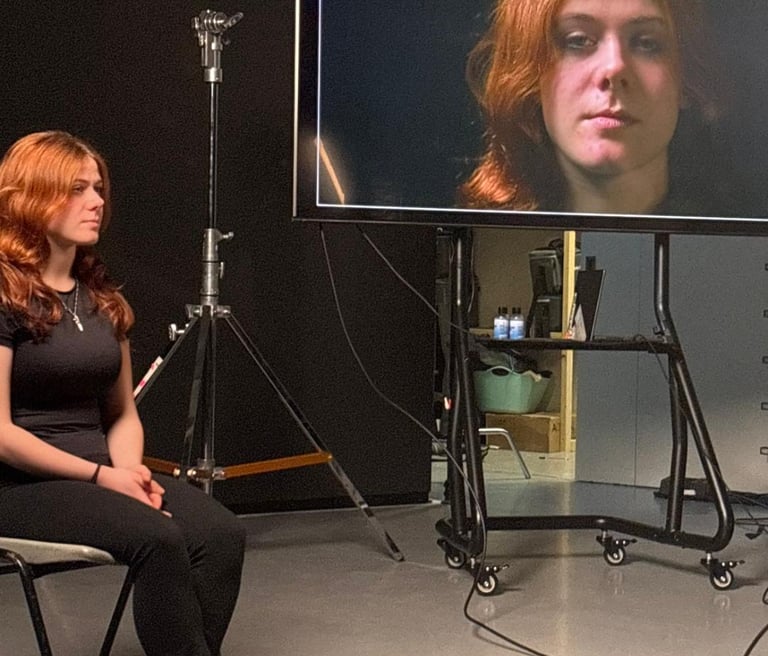
Before this project I knew very little about editing except the basic sequencing and simple cuts although this was all theoretical, as I hadn’t had hands-on experience. And although we did not complete a full edit ourselves this project was really important to me as I was introduced to the foundational concepts which significantly have shaped my understanding of how editing influences storytelling and performance.
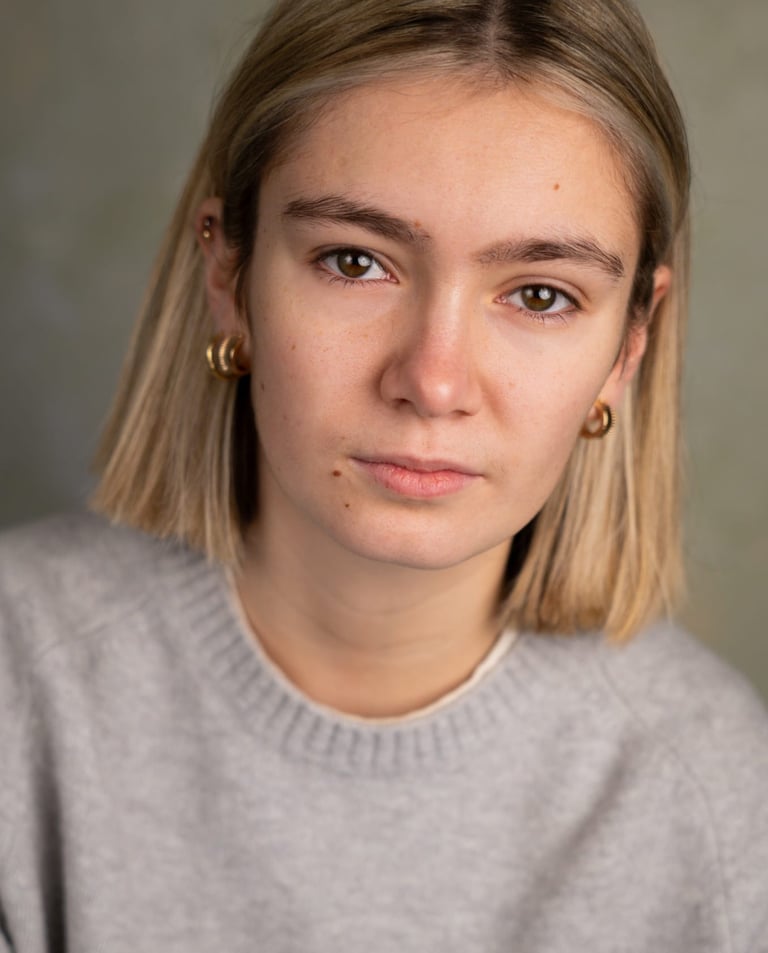
In the workshop in which we focused on shot sizes, camera angles, and editing theory I felt as if I developed a clearer understanding of how visual language supports narrative intention. Exploring the functions of wide shots, mid shots, and close-ups showed how framing establishes the environment we're in while also honing in on the relationships and can shape emotional emphasis. I also found that analysing examples from film demonstrated how shot choice and transitions contribute to pacing, tension, and audience engagement.
As I said previously while we did not sit down to try editing, I found that when doing the different filming exercises practicing different random moments as DOP allowed me to review raw footage with an emerging editorial perspective. I began to consider where cuts might happen, how different the shot sizes could be combined, and how continuity would be maintained across incoming and outgoing shots.
Alongside this on canvas and out of my own interest we were introduced to different editing software’s like DaVinci Resolve which is industry standard. Learning about how it combines editing, colour correction, visual effects, and audio post-production within one system reinforced my understanding of contemporary postproduction as a collaborative and multi-layered process.
Outside of classes I also tried to consolidate my understanding in independent practical experimentation. In order to do this me and Brooke tried to recreate some elements of the in class demonstrations with the makeshift equipment we had. While only using a phone and lamps we made a basic lighting setup and tried to capture a range of shots within a short sequence which we edited together exploring different ways of cutting/formatting. This informal process I think greatly helped me see that while to a lesser extent I could apply this work into practice and so it became practical rather than theoretical. It also reinforced ideas of coverage continuity and how an editor might select shots based on narrative meaning.
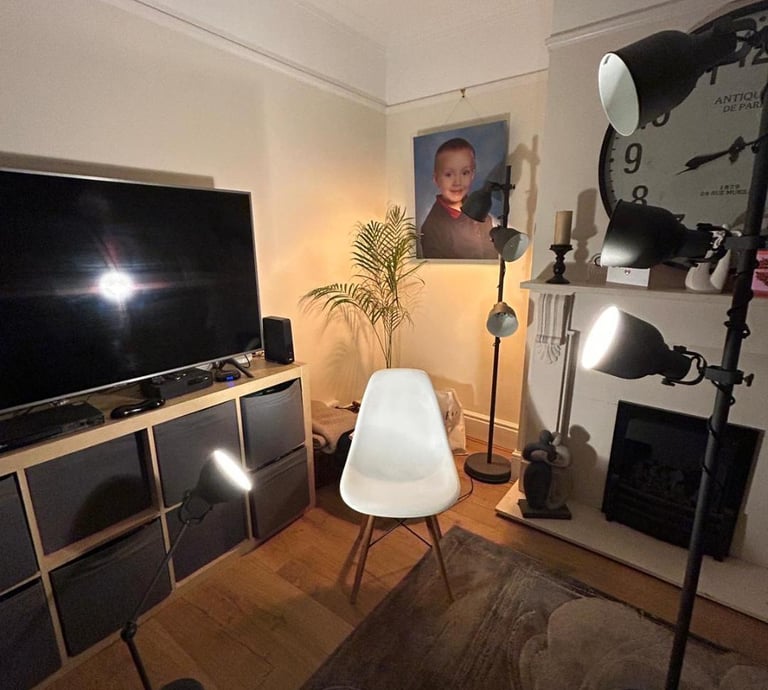
This I think has made me more confident as an actor as it has sharpened my awareness of sightlines, continuity, and spatial precision within performance. It also allows for greater trust in what I am doing in the room as I can understand the bigger picture and how everything will be put together as the performance is only one small factor within the bigger machine.
The Video.
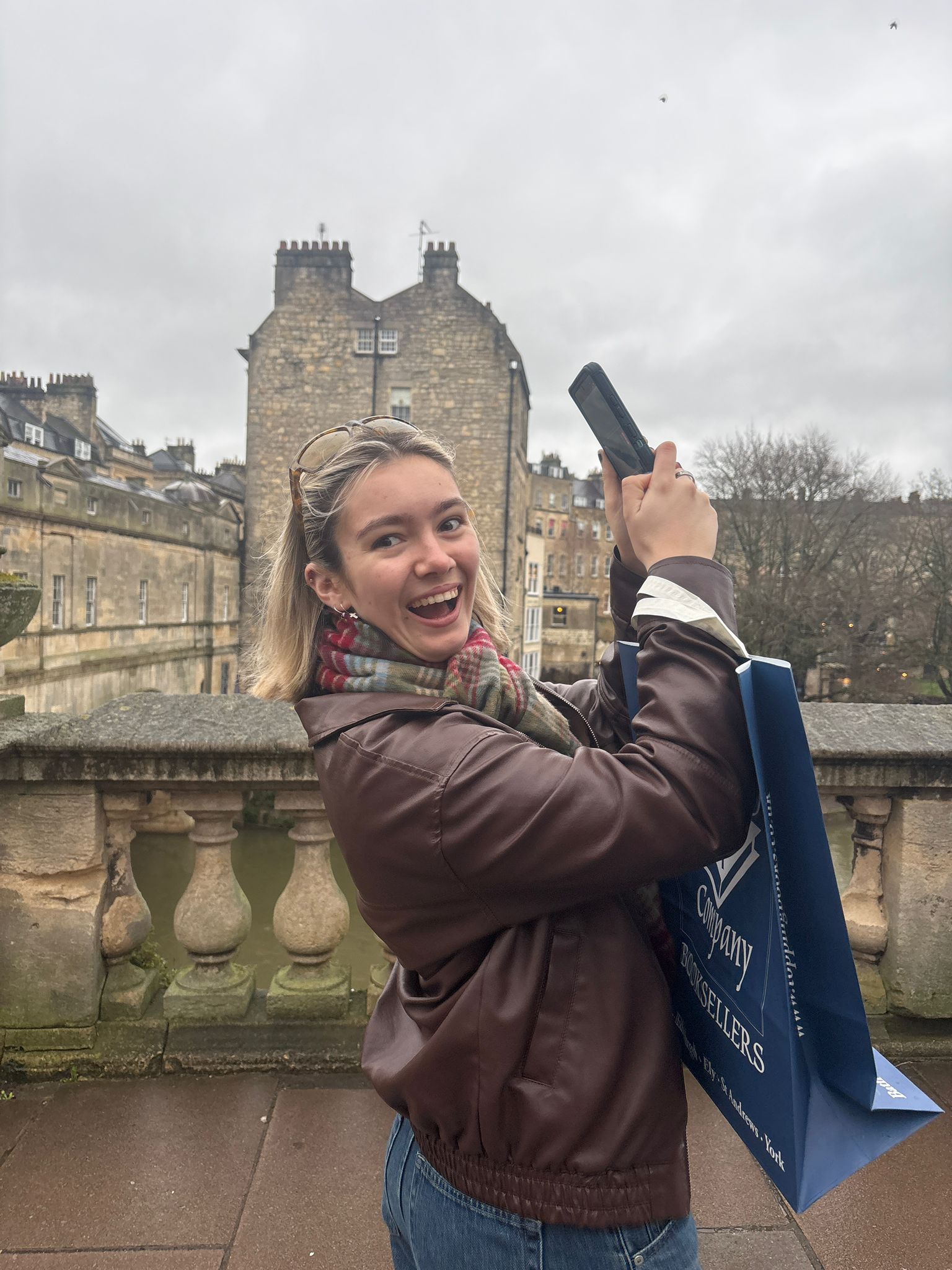
A short video as illustration of me.

Looking Ahead.
Looking ahead, I am particularly interested in developing practical skills in more professional software such as DaVinci Resolve (rather than apps like capcut) as it will be able to widen the possibilities of what I can make. Importantly, I am also really keen to maintain the habit of personally editing short clips and self-tapes as I think this will be a valuable skill. It will let me review my acting with greater objectivity and allow me to feel more natural in front of the camera. Beyond its practical convenience I also think getting to the point where I can edit my own footage will support me and my career as I will be more self-sufficient and so can potentially generate and refine my own creative performance which ultimately will help me bridge performance and screen craft positioning me to work more fluidly.
Contact
Reach out for collaborations or inquiries.
Phone
eleanor.atkins@lamda.ac.uk
+44 798 442 2089
© February 2026. All rights reserved.